Promoted
Kaduna, Kaduna / Kaduna State, 7 hours ago
10 views
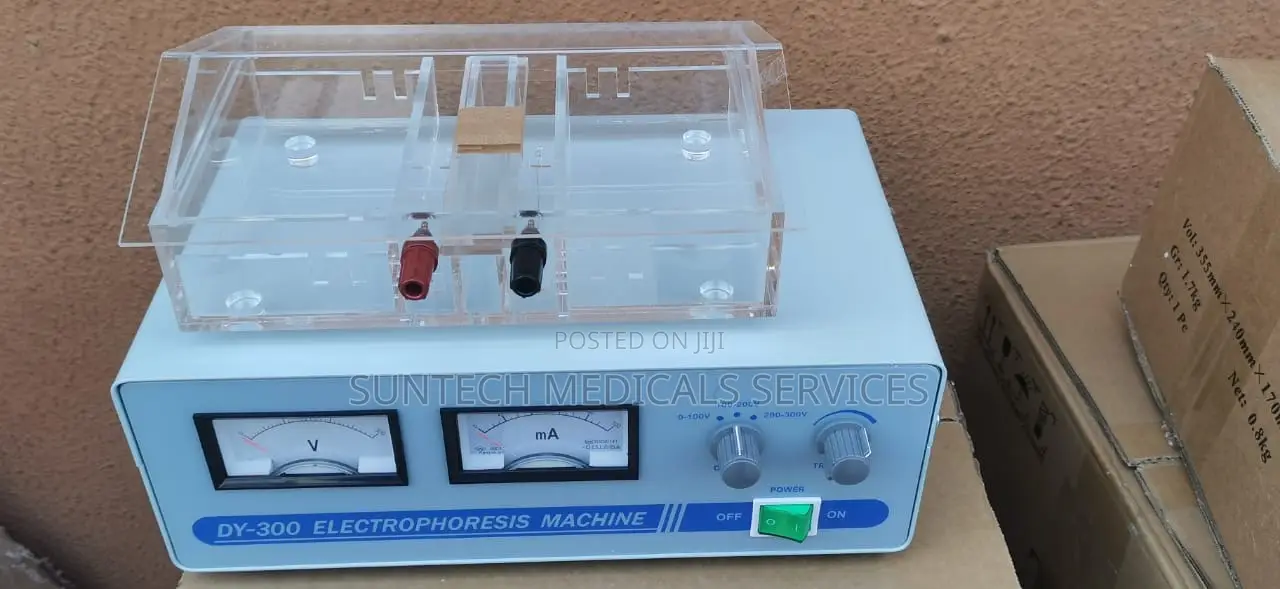
Electrophoresis Machine
Hospital Equipment
Type
Brand New
Condition
Electrophoresis Machine
Hospital Equipment Subtype
A porous gel (usually made of agarose for DNA/RNA, or polyacrylamide for proteins) is cast with small indentations called "wells".Loading Samples: The gel is placed in a chamber and submerged in a conductive liquid buffer. The samples are pipetted directly into the wells.Applying the Current: The machine’s power supply connects to electrodes at opposite ends of the chamber. Because molecules like DNA and RNA are negatively charged, they are repelled by the negative electrode (cathode) and migrate toward the positive electrode (anode).Sieving Effect: The gel acts as a microscopic maze. Smaller molecules weave through the pores quickly and travel further, while larger molecules move sluggishly and stay closer to the wells.
₦ 450,000
Negotiable
Safety tips
- Avoid paying in advance, even for delivery
- Meet with the seller at a safe public place
- Inspect the item and ensure it's exactly what you want
- Make sure that the packed item is the one you've inspected
- Only pay if you're satisfied